
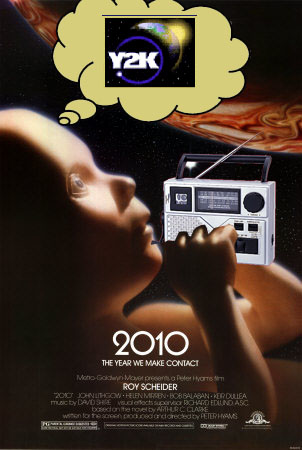
Y2K is a distant memory. Will radio soon be, too?
Myself, I can hardly believe that another decade is coming to a close. It seems like just yesterday we were stockpiling canned goods, bottled water and batteries in anticipation of the Y2K global computer meltdown. Of course, on every millennial survivalists’ compound shopping list was a good battery-operated radio.
Now, ten years on, radio has undergone many changes. Many–like the rise of internet radio–were certainly predictable, even if the particular forms were not. While those of us critical of the consolidation fever that gripped the industry in the late 90s certainly believed that trend would lead to no good, I’m not certain that any of us knew just how badly Clear Channel and its brethren would gut commercial radio, and how many bankruptcies would arise by the end of the decade.
Between now and New Year’s Day my fellow co-bloggers and I will set about enumerating the fourteen most important trends in radio during the 2000s. These trends are in no particular order. Why fourteen? Well, ten was too few, and, uh, we ran out of steam at fourteen.
So, tune back in tomorrow when Matthew and Jennifer will school you about numbers 14 and 13.
The radio-trends-of-the-decade series
- #1: The birth and troubled childhood of satellite radio
- #2: The growth of Internet radio
- #3: I-tunes lures listeners away from terrestrial radio
- #4: Podcasting
- #5: The Age of Pandora
- #6: HD Radio launches, but who listens?
- #7: Internet Radio’s Day of Silence
- #8: The Great Fairness Doctrine Panic
- #9: The FCC authorizes Low Power FM
- #10: Clear Channel goes private equity
- #11: Cash strapped schools turn their backs on college radio
- #12: National Public Radio keeps growing
- #13: College radio tightens its playlist
- #14: Pacifica radio democratizes itself